Femboy Community Guide: How to Find Femboy Friends and Feel at Home
Finding femboy friends starts with joining respectful online spaces, being clear about your interests and boundaries, and participating consistently rather than treating community like a shopping list. The best way to feel at home is to connect through shared hobbies, identity and self-expression while choosing spaces that value consent, privacy and individuality.
Key Takeaways
- Look for moderated, inclusive communities where femboys are treated as people rather than stereotypes.
- Build friendships through shared interests, regular conversation and low-pressure activities.
- Use dating apps, social platforms and femboy-focused spaces for different purposes, and state your intentions honestly.
- Protect your privacy, verify people gradually and take safety precautions before meeting offline.
- Feeling at home comes from contributing to a community, not just finding one.
What Makes a Femboy Community Feel Welcoming?
A femboy community is not defined only by clothing, makeup or presentation. “Femboy” can describe a person’s style, gender expression or relationship with femininity, but it does not automatically describe their gender identity, sexuality or pronouns. Some femboys identify as men, while others may be nonbinary, gender-fluid or use another identity. A welcoming community leaves room for those differences.
The healthiest spaces usually have a few qualities in common:
- Respect for self-definition: Members are allowed to explain their identity and preferences in their own words.
- Clear boundaries: Sexual comments, requests for photos and direct messages are not treated as automatically welcome.
- Active moderation: Harassment, fetishization, hate speech and unwanted behavior are addressed rather than ignored.
- Multiple ways to participate: People can talk about fashion, gaming, music, art, fitness, relationships or everyday life—not only appearance.
- A balance of online and offline connection: Members can participate at a level that fits their comfort and location.
How to Find a Femboy Community Online
Start with spaces built around shared interests
Searching for a community based only on appearance can lead to shallow conversations or unwanted attention. Instead, combine your interest in femboy expression with another topic you genuinely enjoy. Look for groups focused on fashion, alternative style, gaming, cosplay, photography, music, anime, crafts or LGBTQ+ social connection. Shared interests give people a natural reason to talk and make friendships easier to sustain.
When reviewing a new group, read its rules and recent conversations before posting. Pay attention to how members respond to newcomers, whether moderators are visible and whether people can disagree without becoming abusive. A large group is not necessarily a good group; a smaller, active space may provide more meaningful connection.
Use dedicated platforms alongside mainstream apps
Mainstream dating and social apps, including services such as Grindr and Taimi, can help people meet others depending on their goals, location and comfort level. However, general-purpose platforms can vary widely in how much space they give to femboy identity and gender expression. Some users may be looking for dates, while others want friendship, conversation or community.
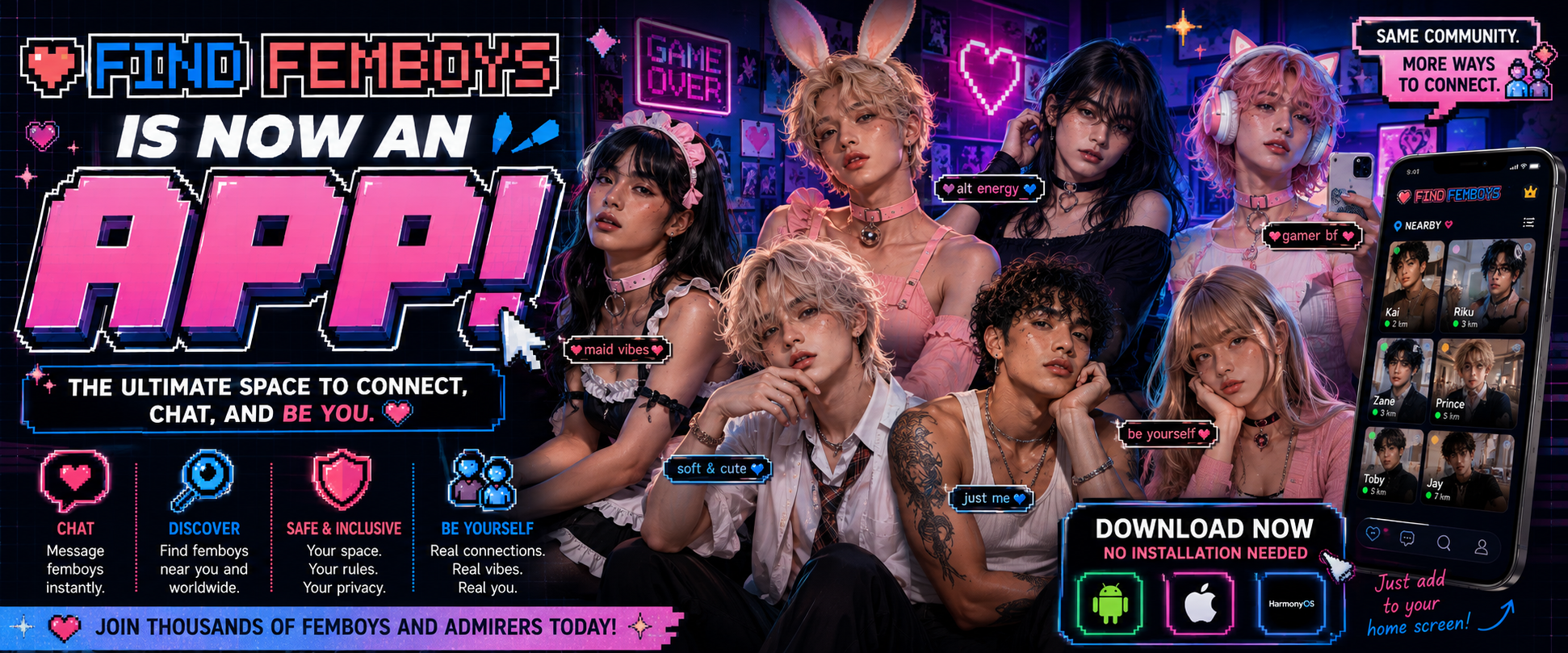
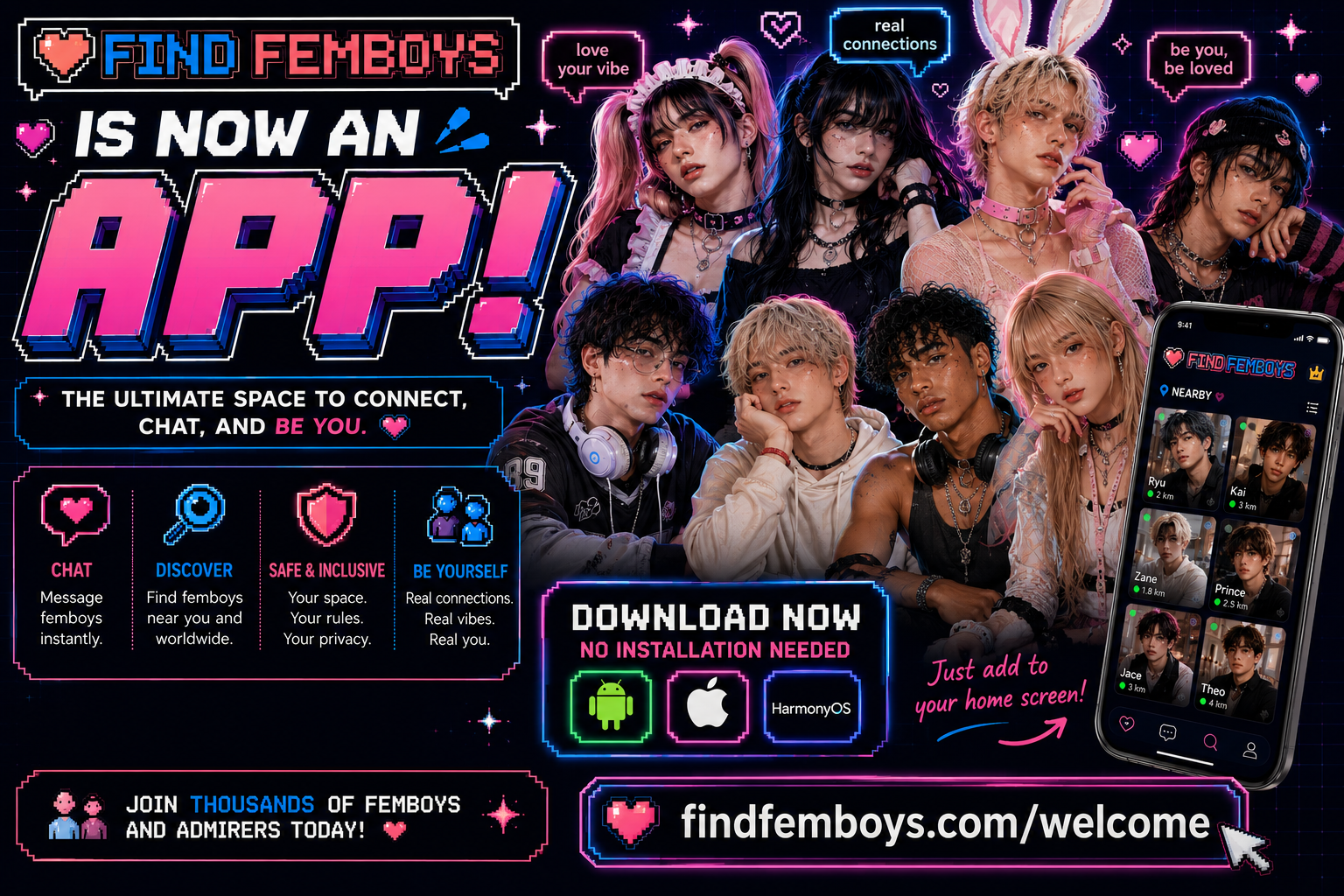
Find Femboys is a femboy-focused platform that offers a more specific starting point for people seeking relevant connections. Whether you use a dedicated platform or a mainstream service, be transparent about what you want. A short profile statement such as “looking for friends who enjoy fashion and gaming” can discourage mismatched expectations and invite better conversations.
Participate instead of waiting to be discovered
Community grows through small, repeated actions. Introduce yourself, respond thoughtfully to posts, share a useful resource or ask an open-ended question. You do not need an impressive wardrobe, perfect photographs or a highly outgoing personality to belong. Consistency is usually more valuable than trying to make a dramatic first impression.
Good conversation starters include:
- “What helped you become more comfortable with feminine self-expression?”
- “Are there any style ideas that work well for someone just getting started?”
- “What games, shows or music have you been enjoying lately?”
- “Do you prefer online chats, group activities or one-to-one friendships?”
- “What makes an online community feel safe and welcoming to you?”
How to Make Genuine Femboy Friends
Friendship usually develops more naturally when you focus on compatibility instead of collecting contacts. Look for people whose communication style, interests and boundaries fit yours. Someone does not need to share every part of your identity to be a good friend, but they should respect your self-expression and take your limits seriously.
Be clear about your intentions
Many misunderstandings happen when one person assumes a conversation is romantic or sexual and the other expects friendship. You can avoid confusion by saying what you are looking for early, without making the interaction feel like an interview. “I’m hoping to meet people for friendship and conversation” is direct and friendly. If you are open to dating, you can say that too, while making clear that consent and mutual interest matter.
Do not assume that a femboy wants to be dominant, submissive, available for sexual discussion or interested in men. Avoid treating feminine presentation as an invitation. Ask about preferences when relevant, listen to the answer and accept “no” without pressure.
Build trust gradually
Online friendships become stronger through reliability. Reply when you can, remember details people share and avoid disappearing after receiving personal information or photographs. At the same time, do not rush intimacy. A person can be friendly without owing you their real name, private images, phone number or immediate availability.
Healthy signs include mutual effort, comfortable pauses in conversation, respect for different opinions and the ability to discuss boundaries without guilt-tripping. Warning signs include repeated requests for explicit content, demands for secrecy, pressure to move platforms quickly, attempts to isolate you from other friends or anger when you decline something.
Join recurring activities
One-time conversations can be enjoyable, but recurring activities create better opportunities for friendship. Consider a regular group chat, collaborative game, virtual styling session, creative project or discussion group. If you are interested in meeting people in your area, search for legitimate LGBTQ+ organizations, community centers, hobby groups and public events through their official channels. Local availability differs, so verify current details, accessibility and age requirements before attending.
Friendship does not have to mean meeting in person. Online friends can be meaningful, especially for people who live in rural areas, have limited mobility, are not out to family or do not yet feel safe expressing themselves locally.
Staying Safe in Online and Local Communities
Protect personal information
Use a username that does not reveal your full name, school, workplace or exact neighborhood. Be cautious about sharing identifying details in public posts, including photographs that show house numbers, work badges, license plates or recognizable locations. Consider separate social accounts for community participation, and review privacy settings regularly.
Never let someone pressure you into sharing intimate images. Once an image is sent, you cannot fully control where it goes. If someone threatens to share private content, stop negotiating, save evidence, block or report the account and contact a trusted person or relevant local support service.
Plan first meetings carefully
If you decide to meet someone offline, choose a public place during a busy time and tell a trusted person where you will be. Arrange your own transportation so you can leave independently. A first meeting should be brief and low-pressure, such as coffee, a public hobby activity or a daytime community gathering. Avoid giving a new acquaintance your home address or relying on them for a ride.
Trust your instincts. You do not need a dramatic reason to end a conversation or leave a meeting. Feeling uncomfortable is enough. A respectful person will accept your decision rather than demanding an explanation.
Check age and community rules
Use spaces appropriate for your age and follow their requirements. Adults should never pursue sexual or romantic interactions with minors. If a platform has age-verified areas or separate channels, respect those boundaries. Communities should also make it easy to report harassment and should explain how moderators handle complaints.
Feeling at Home When You Are New
It is common to feel nervous, especially if you are exploring feminine expression for the first time. You do not have to arrive with a finished identity, a particular body type or a complete wardrobe. Try small steps that feel comfortable: save style inspiration, experiment privately, talk with one supportive person or participate in a text-based group before sharing photographs.
Comparison can make community feel less welcoming than it really is. Social profiles often show carefully selected outfits, flattering angles and the most confident moments. They do not show uncertainty, financial limitations, family pressure or the time it took to develop that style. Your appearance does not determine whether you are a “real” femboy, and you do not need anyone’s approval to express yourself.
You can also help create the environment you want to join. Welcome new members, avoid commenting on bodies without permission, use people’s stated names and pronouns, and challenge stereotypes respectfully. When members contribute patience and kindness, the community becomes safer for everyone.
Common Mistakes to Avoid
- Assuming every interaction is romantic: Begin with ordinary conversation and let mutual interest develop.
- Reducing people to a label: Ask about hobbies, opinions and goals rather than focusing only on presentation.
- Ignoring boundaries because a space is flirtatious: Flirting still requires consent, and consent can be withdrawn at any time.
- Moving too quickly: Trust is built through repeated respectful behavior, not intense attention during the first conversation.
- Staying in a hostile group: You are allowed to leave, block users and look for a better-moderated space.
Creating Your Own Sense of Belonging
The most useful answer to “how to find a femboy community” is to combine discovery with participation. Explore several spaces, keep the ones that feel respectful and contribute in ways that match your energy. You might eventually organize a small online discussion, share outfit advice, start a gaming night or connect people around a local hobby. Community is not only somewhere you go; it is something members build together.
Give yourself time. The right friendships may come from an unexpected conversation rather than an immediate match. With clear boundaries, realistic expectations and regular participation, you can find people who appreciate femboy expression while also seeing the full person behind it.
Related guides
- Femboy Communities Online in 2026: Where Femboys Actually Connect
- Femboy Finder – Top Dating Site 2025 for Femboys and Fans
- Femboys Near Me: Find Local Femboy Dating Options
how to find a femboy community